IAB Tech Lab are a small, but very mighty and critically important non-profit consortium that work globally & collaboratively to support all of the 46 local IABs and the local markets they serve by developing foundational technology and standards that enable growth and trust across the digital media ecosystem.
The quality and volume of output through 2025 and already in 2026 is such that we felt compelled to provide a quick summary of 6 recent updates which we felt are the most exciting and important for the Australian industry to be aware of through 2026. There are many other projects also in play but wanted to highlight the ‘top 6’ for awareness and provide a brief summary on each initiative.
- Agentic Roadmap for Digital Advertising
- Deals API
- CTV Ad Portfolio
- Event and Conversion API
- Content Monetisation Protocols for AI
- Device Attestation support in OM SDK
We will also highlight how we intend to support, test and build awareness for each of these initiatives locally here in Australia through 2026. Any questions or interest in actively collaborating please just email jonas@iabaustralia.com.au
The Agentic Roadmap for Digital Advertising
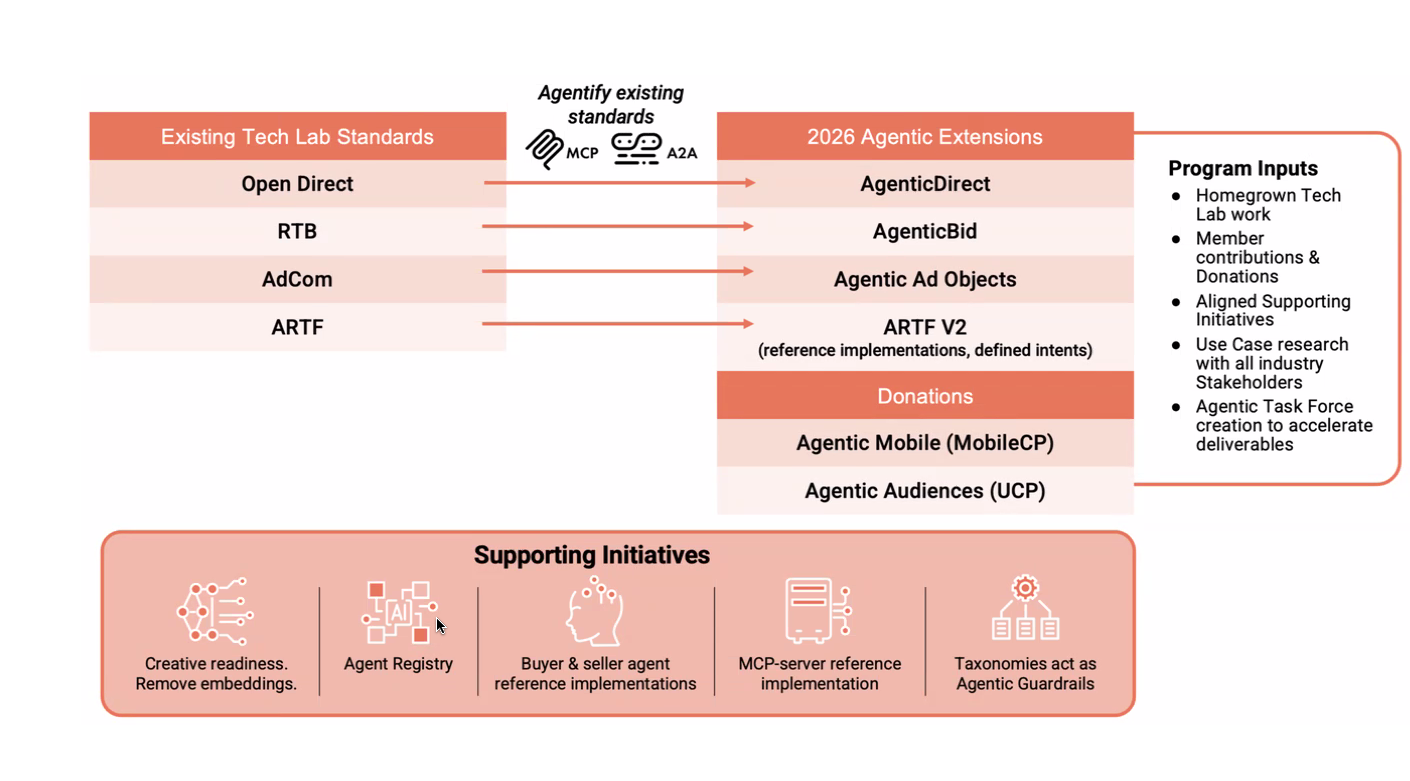
The IAB Tech Lab Agentic Roadmap builds upon and extends standards such as the recently released Agentic RTB Framework & Deals API along with a range of other well established standards which our industry already relies upon (such as OpenRTB, AdCOM, OpenDirect, VAST, GPP & TCF) to support agentic execution, governance, trust, and measurement whilst aligning with how digital advertising actually functions operationally.
Other key foundational agentic protocols will be leveraged such as the Model Context Protocol (MCP) and Agent2Agent at the application layer, and gRPC at the transport layer – which are already providing native agentic capabilities, extensibility, and registry mechanisms. The intention is for IAB Tech Lab to build upon these open-source agentic frameworks and established advertising industry standards to enable an efficient and secure agentic control plane that can preserve interoperability whilst unlocking machine speed execution.
Through 2026 IAB Tech Lab will extend these standards into the agentic execution layer through focused initiatives, including open-source reference implementations of buyer and seller agents, a neutral Model Context Protocol reference server, standardized agent profiles, Protocol Buffers, and gRPC mappings for existing specifications, and other open-source agentic tools based on industry feedback.
IAB Tech Lab is also prioritising the development of governance, data provenance, and transaction-integrity , along with privacy requirements (implemented by GPP & TCF) to provide the robust technical foundations required to implement agentic workflows quickly and safely – both for internal use and for interacting with partners’ AI agents across the advertising ecosystem.
For our industry, this will mean much faster speed-to-value. Agencies, publishers, brands, and technology providers can adopt agentic workflows more quickly, reduce integration complexity, and lower operational risk by modernising execution rather than reinventing foundations, empowering stakeholders to lead innovation.
This roadmap will evolve quickly and locally we will be leaning on a number of our different councils and working groups to support these efforts here in Australia. We’ll be sharing more info as the project launches formally – and to review the current standards that have already been released please see the links below:
- Agentic RTB Framework (ARTF) – proposed in draft in November 2025 the ARTF is foundational for agentic media trading as it allows technologies to interact across the programmatic advertising ecosystem via containerized architecture, enabling much faster communication and more efficient data exchange.
- User Context Protocol (UCP) – soon to be renamed to Agentic Audiences & donated to IAB Tech Lab by LiveRamp in Q4 2025, UCP an open standard that defines how intelligent agents in advertising exchange signals (such as identity, contextual, and reinforcement information) that represent a consumer’s real-time intent and response to advertising.
For a very top-level preview of the roadmap, which will be fully announced and clarified next week, please see below and to read related recent blog article (written by IAB Tech Lab CEO Tony Katsur) CLICK HERE
Deals API
Amongst all the promises of programmatic and automation, a huge pain-point has long existed for ops teams on both the buy and sell sides – the relentless and often chaotic admin related to Deal IDs. These unique deal identifiers enable the execution of commercial media agreements through well established and much used programmatic PMPs (private marketplaces) and direct deals – which contain all the key deal attributes such as pricing, targeting criteria, ad formats and audience data segments.
Unfortunately (until now!) there has never been a single deal-API spec which has often resulted in messy ad-hoc practices between different buyers, sellers and their various ad tech platforms. Missing info, random strings and unique naming conventions result in endless back and forth emails between different ops teams and too regularly simple deals take too long, are very painful to activate efficiently or even worse simply don’t get fulfilled.
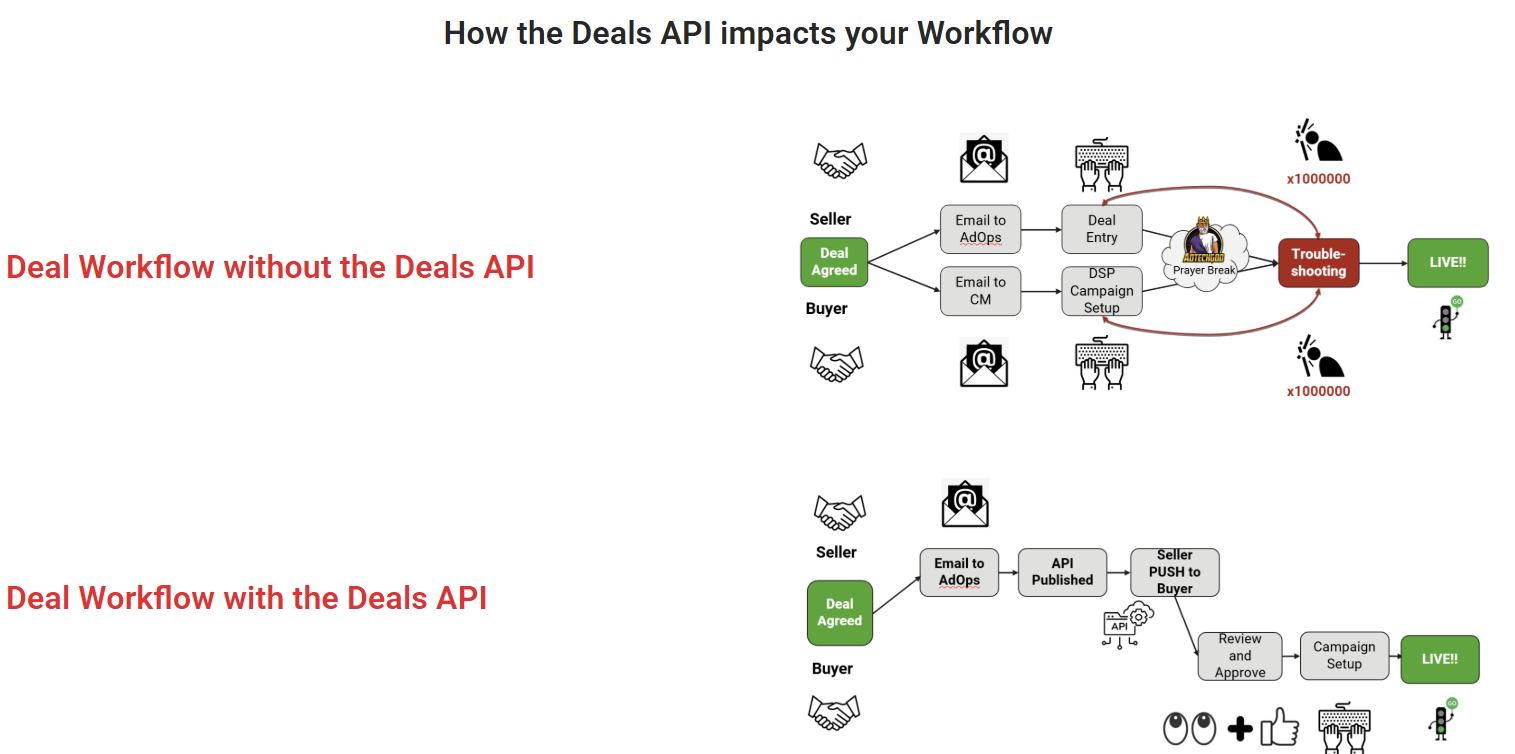
The Deals API works to address these core issues through providing transparency into deal structures by establishing one standardised schema, one set of fields and an outline of the parameters of the deal that everyone can read and understand in the same way. Also, by explicitly identifying the business entities involved in the packaging of any deals – including the seller, packager, and curator (where applicable) opacity can be eliminated, helping to foster accountability and strengthen trust across all the parties involved throughout the transaction chain.
To review the v1 of these the Deals API specs click here and for a (very amusing) visual of the workflow from Hillary Slattery at Tech Lab see below. Locally we’ll be reviewing this in our S&G Council meetings in Q1 2026 and providing related support and active guidance here in Australia on some example use cases and benefits.
CTV Ad Portfolio
In Q4 2024 IAB Tech Lab launched the CTV Ad Format Hero initiative to standardise the plethora of ad-hoc CTV ad formats that were being delivered by seeking creating submissions for review from across the industry.
From over 100 submissions a list of popular format types were identified and the industry surveyed on both the buy and the sell sides to understand the level of interest in each format and what opportunities for revenue, efficiency, and growth each format could potentially provide. Ultimately the list was narrowed down to six new ad formats (along with the already established linear ad format) which could be standardised for full adoption and specifications designed.
The final list is below and the initial specifications for each (click here) were published in Q4 2025:
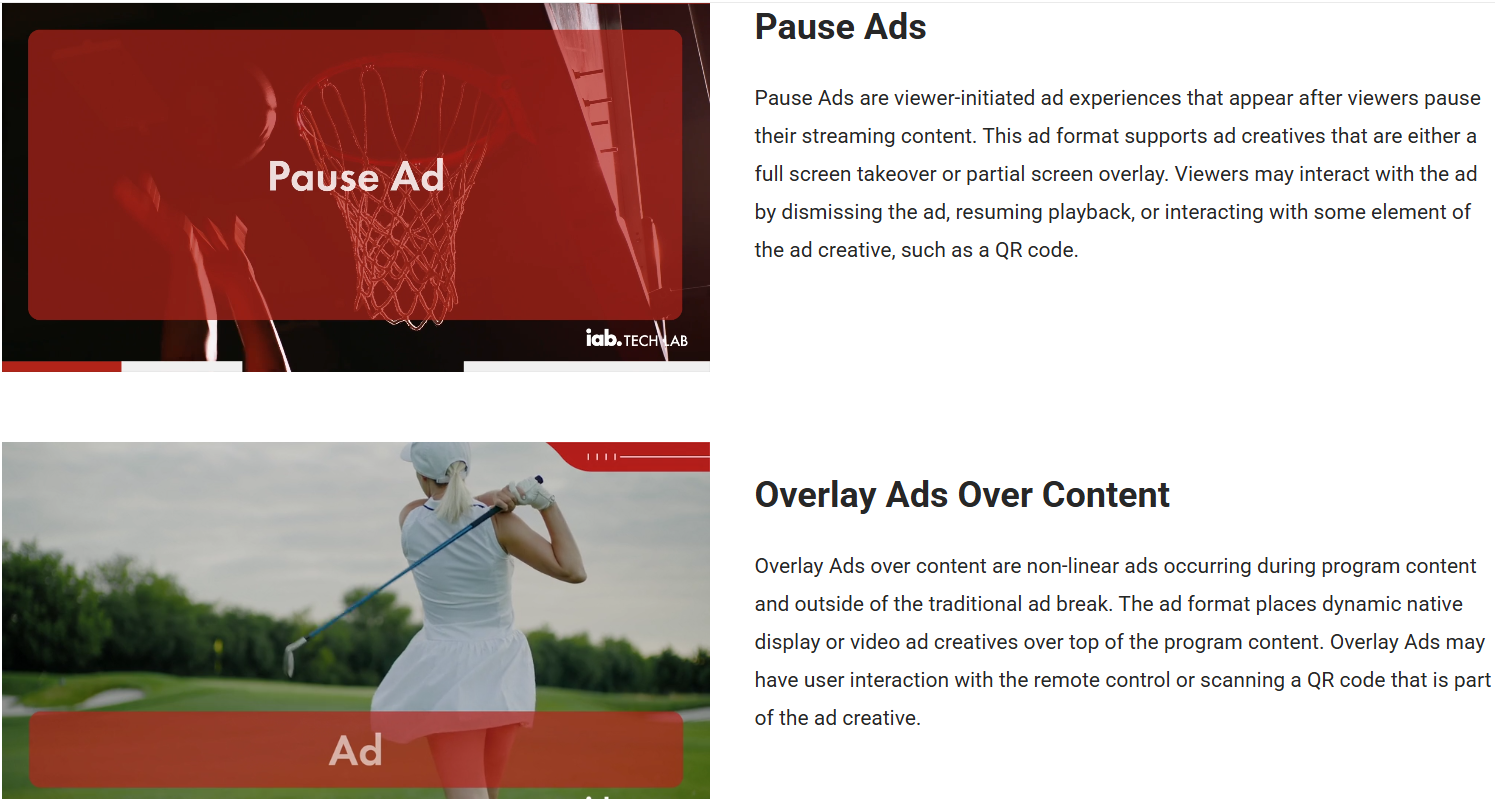
● Pause Ads
● Menu Ads
● Squeezeback Ads
● Overlay Ads
● In Scene Ads
● Screensaver Ads
Alongside this an update to the CTV Programmatic Guide was released to help support adoption.
Locally we’ll be reviewing both of these recent updates in our Video council meetings in Q1 2026 and will provide updates, awareness and feedback as required.
Another key project for CTV advertising through 2026 will be the Live Event Ad Playbook (LEAP). This is a series of technical recommendations and protocol enhancements aimed at enabling scalable, low-latency, and reliable ad delivery within live streaming environments.
To learn more about LEAP simply click here
Event & Conversion API
Various ad platforms use different versions of Conversion APIs to help optimise marketing campaigns toward desired outcomes and better measure and report on marketing campaign performance across marketing funnels. Whilst these solutions can be effective individually, trying to integrate with multiple partners often requires custom development work due to key differences in the structure and requirements of each of the Conversion APIs. Overtime, that complexity becomes costly and resource-heavy to manage and increasingly difficult to scale.
Published in January 2026, the draft v1 of the Event and Conversion API (ECAPI) looks to address this challenge by providing a flexible but consistent framework that reduces implementation effort while supporting a wide range of use cases. The ECAPI specification is designed to scale with industry needs and allows for specialisation without requiring entirely new custom integrations. This approach helps advertisers and platforms work more efficiently while improving the quality of data used to drive performance and return on investment.
ECAPI will also be built directly into the IAB Tech Lab agentic roadmap through 2026 so that outcomes-based buying and selling with measurable goals using agents can become a reality. Locally we will review these draft specs and feed into the feedback process, if required. Thereafter we’ll look to build awareness and seek a case study (post adoption) from members keen to test out ECAPI and amplify the benefits.
To review the ECAPI specs simply click here
Content Monetisation Protocols for AI
Through 2025 the industry globally grew increasingly aware of the opportunities and challengers for both publishers and brands presented by the growing usage by consumer of different LLMs, AI-agents and AI-driven search summaries.
To help counter some of the related potential issues and give industry some meaningful tools to embrace potential opportunities, the LLM Content Ingest API was published in June 2025. This API is a framework designed to help protect the intellectual property of content publishers while still allowing AI systems to learn and create outputs from their content. Also included is a set of publisher content monetisation and brand content management proposals.
The core framework and new APIs enable:
- Controls and guided access for LLM and AI agent bots.
- LLM friendly content access.
- A ‘cost per crawl’ monetisation opportunity and API for interoperability.
- Dynamic monetisation for content with variable pricing and bidding opportunities for fast moving or in demand content using the LLM Ingest API.
- AI native technologies such as Model Context Protocol (MCP) based NLWeb protocol to be integrated with LLM Ingest API for publishers and brands.
Following the release of the LLM Content Ingest API, IAB Tech Lab announced the launch of a global ‘Content Monetization Protocols (CoMP) for AI‘ Working Group. Locally we are very keen to be involved, have registered and will keep across the various initiatives that will be driven out of this working group and the related impacts for both publishers and brands through 2026 as the usage of these various AI tools inevitebly grows.
To review the LLM Content Ingest API simply click here
Another key publisher focused project through 2026 will be Trusted Server – which is an open-source, server-side ad management framework designed to give publishers greater control over their digital advertising monetisation, in the face of increasing browser restrictions and ongoing privacy regulations.
To read an explainer on Trusted Server please click here
Device Attestation support in OM SDK
The Open Measurement SDK (OM SDK) is a long standing and well adopted industry-standard solution that enables enables advertisers and publishers to gain independent, unbiased measurement that works with multiple verification partners simultaneously – thereby verifying that their CTV, Mobile and online video ads are being seen by real people, viewable on devices, and delivering genuine value.
One area of fraud that has always been a ever-moving target to overcome is the challenge of device spoofing via the misrepresentation of device information. In premium ad environments this results in wasted ad spends for buyers, lost revenue for sellers and funding crime.
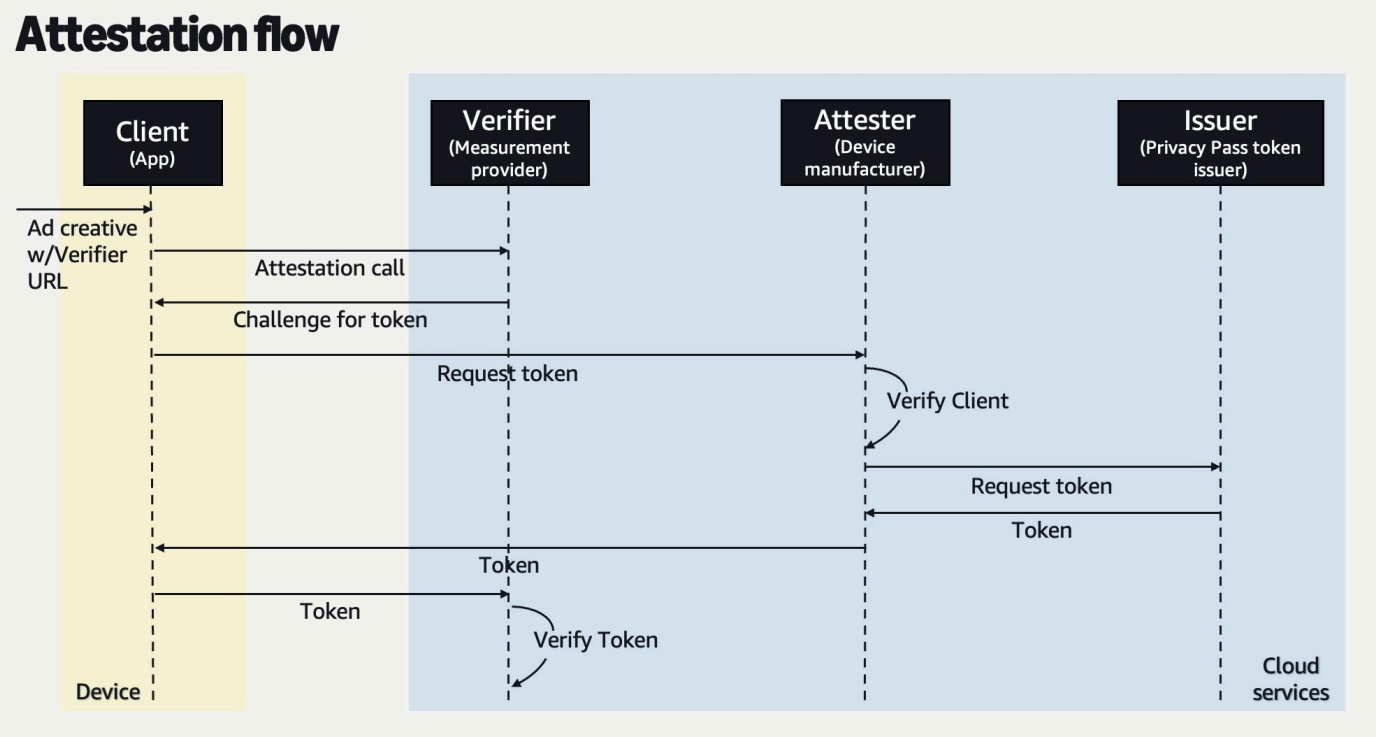
In November 2025 IAB Tech Lab released the device attestation feature for OM SDK – which allows manufacturers to confirm that ad impressions are genuinely associated with real devices resulting in industry having access to deterministic manufacturer-verified signals at scale, which are will always be more reliable than traditional probabilistic fraud detection approaches.
Locally we’ll be in touch with the seven Australian members that are certified for Open Measurement SDK and the various global verification vendors involved – to review and amplify the feature adoption and resulting benefits. More will follow…
A visual flow of the new feature is below and to review the implementation guidelines click here
Also, to review device fraud and many other examples of ad fraud and related best practices simply access our Ad Fraud Handbook here